
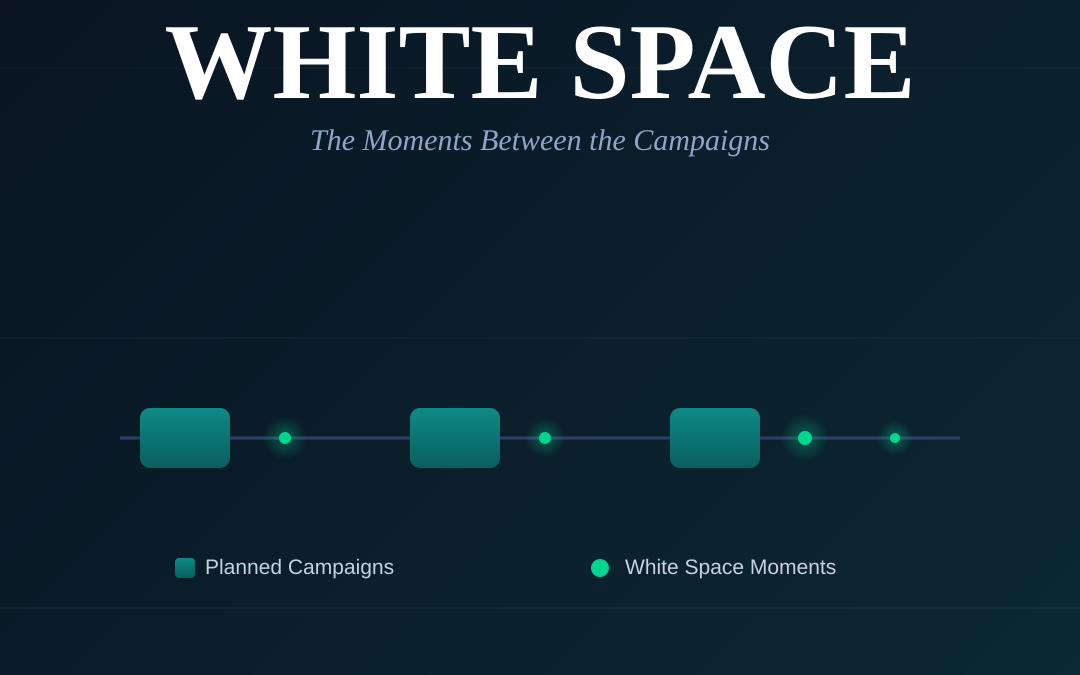

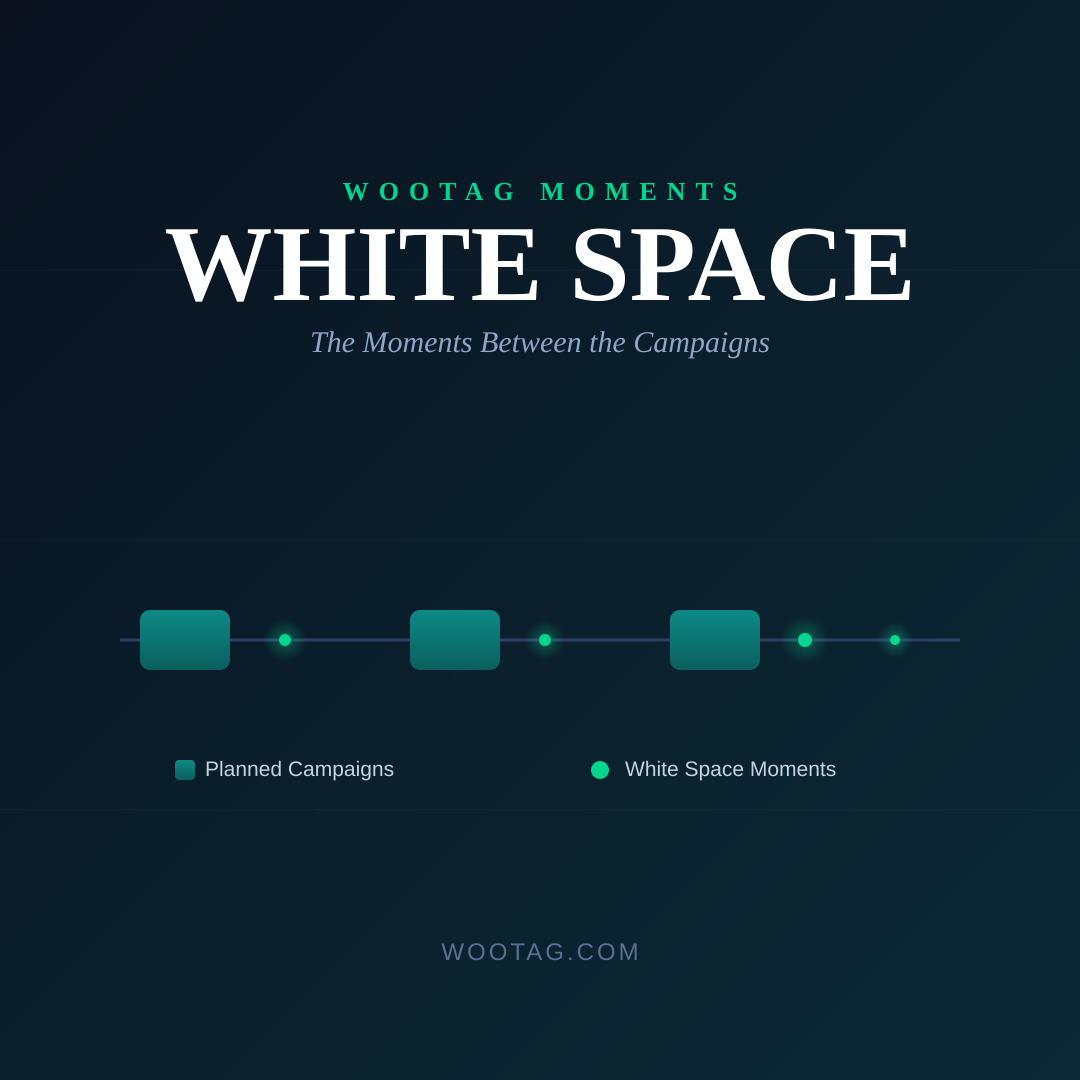
Somewhere between the last campaign wrap and the next campaign brief, the world keeps moving — and that gap is exactly what we call white space in marketing.
A team wins a match nobody expected them to. A heatwave breaks records. A currency swings overnight. A cultural moment goes from niche to mainstream in a single afternoon.
Every one of these is a moment when a brand could show up with something true, timely, and relevant to its audience. And almost every brand says nothing at all — not because the idea didn’t occur to anyone, but because the way marketing is built structurally can’t respond fast enough to catch it.
That unclaimed gap between planned campaigns is white space, and it’s the largest untapped opportunity most marketing teams have.
The Planned Playbook vs. White Space
For decades, marketing has run on the same operating model: set an annual calendar, agree key campaign moments months in advance, brief the agency, produce the assets, book the media, launch, measure, repeat.
It’s a good model — for the moments a brand can see coming. A product launch, a festive season, an anniversary. Nothing about white space marketing argues against planned campaigns; they’ll always own the moments you can put a date on.
But a calendar fixed in last quarter’s planning meeting can’t see the heatwave that arrives in March, the underdog run nobody predicted, or the rate decision that changes what your customer can afford tomorrow. The planned playbook was never built to react. It was built to schedule.
So the real-world moments that fall outside the schedule — thousands of them, every year — go unclaimed. That’s white space, sitting unused underneath every media plan.
Why White Space Is the Space to Watch
Three things are converging to make white space impossible to ignore:
- Attention has fragmented into moments, not slots. Audiences move in and out of live sport, live weather, live markets, and live culture all day — a brand that only shows up in booked slots is absent from most of where attention actually lives.
- Real-time culture moves faster than production cycles. By the time a reactive asset is briefed, produced, and approved the traditional way, the moment that made it relevant has usually already passed.
- Early movers are already testing white space activation. Once one brand in a category proves it can show up first and relevantly, everyone else is forced to respond on the same terms.
White space isn’t a new channel to add to next year’s plan. It’s the space that quietly decides who looks relevant this year — and who always looks a moment behind.
Turning White Space Into a Repeatable Marketing Capability
Occupying white space well isn’t about bigger budgets or faster agencies. It takes a different kind of readiness: pre-approved rules, an always-on trigger layer, and channels a brand can activate the instant the real world creates an opening — governed, not ad hoc.
That’s the full argument we lay out in our white space white paper, including:
- A practical framework for turning white space into a repeatable capability
- Which channels actually respond fast enough to matter
- How sales, dealer, and retail teams can use the same white space triggers marketing does
- The metrics that measure white space, since planned-campaign reporting was never built to
Download the White Space White Paper →
Because the next relevant moment isn’t on anyone’s calendar — and it’s already on its way.
S
